
The Return of Industrial America
America just built factories faster than at any time in generations. The boom has crested — and the more interesting phase is starting.
Bottom Line Up Front
Between 2021 and 2024, spending on factory construction in the United States roughly tripled, from an annual pace around $80 billion to a peak of $240 billion in August 2024, by far the fastest industrial building boom in modern records.
That boom has now crested. Census data put the pace near $196 billion in January 2026 and about $175 billion by May, with the semiconductor-heavy computer and electronics category well off the peak it reached in July 2024 as giant fabs finish construction and CHIPS Act support sunsets.
Don't read the rollover as failure. Construction spending falls when buildings get finished. The factories are now filling with equipment and people, which is the phase where the economic payoff, and the hard part, actually begins.
The winners are narrower than the political speeches suggest: specific regions, construction and electrical trades, equipment makers, and utilities. The constraint that decides the next decade isn't money. It's electricity and skilled labor.
The longest round trip in American economics
For fifty years, the American factory story ran one direction. Youngstown's mills went quiet in the late seventies. The industrial Midwest spent the eighties earning its nickname. China joined the WTO in 2001, and over the following decade the U.S. lost millions of manufacturing jobs while everyone learned to say "supply chain" without thinking about where the chain actually was. By 2019, making things had become, in the polite consensus, something other countries did.
Then a pandemic revealed that America couldn't produce enough masks, a chip shortage parked half-finished pickup trucks in fields for want of a two-dollar component, and a war in Europe reminded everyone that industrial capacity is a weapon. Between 2020 and 2022, a fifty-year consensus flipped. Congress passed the CHIPS and Science Act and the Inflation Reduction Act, and something happened that no living analyst had seen: the factory construction line on the Census Bureau's chart went vertical.
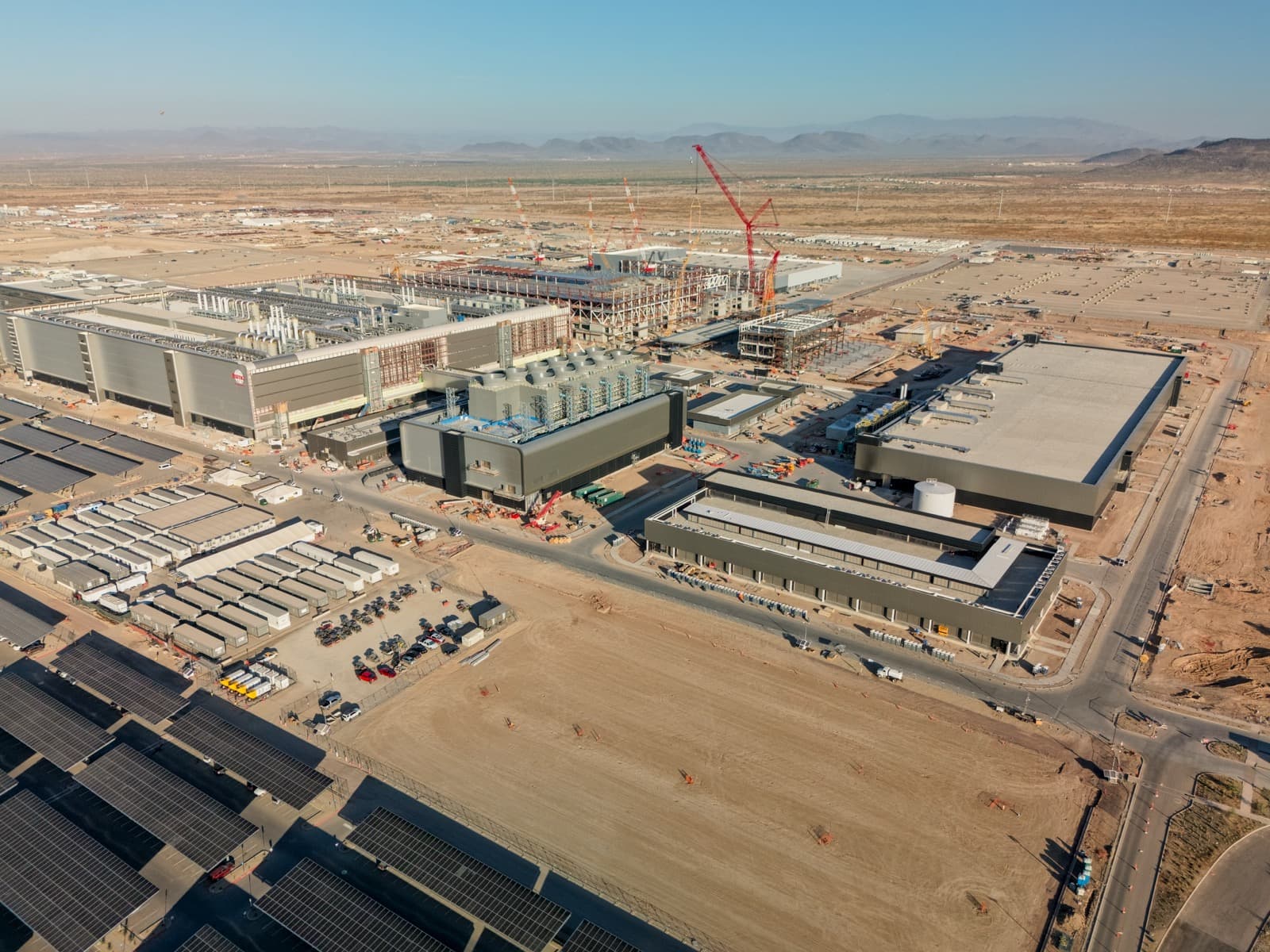
Pause on how strange that chart is. Factory construction spending had drifted between $40 and $80 billion a year for decades. By late 2024 it touched $240 billion. Adjust for inflation however you like; there's no comparable stretch since the data begins. Cranes rose over Arizona desert, Ohio farmland, and Texas plains, building semiconductor fabs, battery plants, and everything that feeds them.
What a boom looks like when it's working
Here's the plain-English mechanics. Industrial policy in this cycle worked mostly by de-risking: government grants and tax credits didn't fund whole factories, they covered enough of the cost, and signaled enough durable intent, that boards approved projects they'd studied and shelved for years. A fab that costs $20 billion and lives for decades gets built on confidence about the 2030s, not this quarter.
Now the boom is doing what completed booms do: rolling over in the statistics precisely because it succeeded. When TSMC finishes pouring concrete in Phoenix, construction spending drops; then billions in tools move in and hiring starts, and that shows up in different data: equipment investment, industrial production, payrolls. Judging reshoring by construction spending alone is like judging a restaurant by how loud the kitchen renovation is.
So who actually benefits? Follow the chain, because it's longer than "factory jobs." A fab needs a construction workforce for years, then electricians, pipefitters, and technicians permanently. It needs staggering amounts of power, which means utility capex, transformers, switchgear, and grid upgrades, the same equipment the AI data-center boom is fighting over. It needs suppliers nearby. Regional economies around Phoenix, Columbus, and the Southeast's "battery belt" get a compounding local multiplier. The under-appreciated winners are the boring ones: electrical equipment makers, engineering firms, industrial REITs, community colleges training technicians.
The under-appreciated losers: anyone assuming this makes goods cheaper. Reshored production is more expensive production, at least for years. That's a bill, paid in prices, for resilience.
Cardinals, it's worth remembering, don't migrate. Through the decades when the flashy story was capital flying offshore to wherever labor was cheapest, a core of American manufacturing wintered in place, defense plants, chemicals, aerospace, precision machinery, holding the know-how that made this rebuild possible at all. The boom didn't conjure an industrial base from nothing. It fed one that had toughed out the winter.
One honest caveat belongs here: 2025's tariff wave muddied the picture. Tariffs raise the cost of imported construction materials and equipment, the very inputs a factory boom needs, and the data since has shown overall nonresidential construction softening. Policy is now both feeding and taxing the same buildout.
Key Judgments
- Factory construction has peaked for this cycle but will plateau far above the pre-2021 norm, roughly double the old baseline, rather than round-trip. The regime changed; the spike didn't.
- The binding constraints on reshoring through 2030 are electricity availability and skilled trades, not capital. Projects will slip years for want of megawatts and electricians.
- The economic gains will stay geographically concentrated. A dozen metros capture most of the value; "industrial renaissance" will feel true in Phoenix and abstract in most of the country.
- Measured productivity from these plants arrives late. Expect a stretch where costs are visible and output isn't, and expect that gap to be used politically against the whole project.
Risks & Counterarguments
The skeptic's case is respectable. Much of the boom was one sector, semiconductors, responding to one law, and that impulse is fading on schedule; calling it a broad renaissance may be generous. Manufacturing employment has barely moved, because modern factories are heavily automated, so the promise of mass factory jobs will likely disappoint. Subsidized capacity can become subsidized overcapacity; the world has seen battery and solar gluts before, and some CHIPS-era projects have already been delayed or trimmed. And if tariffs keep raising input costs, policy could smother the very investment it means to attract. The rebuild is real; the guarantee of a payoff isn't.
Why It Matters
Where a country makes things determines more than its trade balance: its leverage in a crisis, the wage floor of its non-college workforce, and which regions rise over the next generation. The investable edge of this story isn't the ribbon-cuttings; it's the second-order demand, for power, equipment, and skills, that a physical buildout drags along with it. We cover the defense-specific version of this rebuild separately; this is the economy-wide frame.
What We're Watching
- Census construction spending, manufacturing category: does it plateau near $180–200 billion or keep sliding toward the old baseline?
- Equipment investment in GDP and industrial production for semiconductors and batteries: proof the finished shells are actually producing.
- Fab and battery plant timelines: further delays or cancellations are the clearest falsifier.
- Transformer and electrical-equipment lead times, the physical chokepoint shared with the data-center boom.
- Manufacturing employment and technician-training pipelines in the boom metros.
Sources: U.S. Census Bureau Construction Spending (Value Put in Place); Bureau of Economic Analysis fixed investment data; CHIPS Program Office announcements; Bureau of Labor Statistics; FRED. This is analysis, not investment advice.