
The Automation Economy
America wants its factories back, but the workers who ran them are retiring by the thousands every day. Robots aren't taking those jobs — they're inheriting them.
Bottom Line Up Front
The automation story is usually told backwards. The popular version is robots coming for scarce jobs. The real version is robots arriving because workers are scarce.
The demographics are simple and unforgiving: roughly 10,000 Americans hit retirement age every day, and manufacturing skews older than the workforce overall. Industry studies project around 1.9 million U.S. factory jobs could go unfilled by the early 2030s.
At the same time, America is trying to reshore production — semiconductors, batteries, munitions, machinery. New factories are being built faster than people can be found to staff them.
Automation is how the equation closes: over half a million industrial robots installed worldwide in a single recent year, warehouse robotics now ordinary, and humanoids moving from demo videos to genuine pilots — still the smallest, least proven part of the story.
The practical conclusion: the durable money in automation is in the picks and shovels — robot makers, integrators, machine vision, motion components — not in betting on which humanoid wins.
The retirement party problem
Picture a Tuesday afternoon in a machine shop in Ohio. Sheet cake, handshakes, a card everyone signed. The man retiring has run the same family of CNC machines for 34 years. He can hear when a cut is going wrong. He is, in every way that matters, the factory's institutional memory — and next Tuesday there's another cake, at another shop, and thousands more like it across the country. That's not a metaphor. It's the actuarial table doing exactly what it said it would.
Now put that next to the other headline of the decade: America building factories again at a pace not seen since the 1970s — chip fabs, battery plants, defense lines. We covered the buildout in The Return of Industrial America. Here's its inconvenient sequel: a Deloitte and Manufacturing Institute study projects the U.S. will need to fill around 3.8 million manufacturing roles through 2033, mostly from retirements, with roughly half at risk of going unfilled. The reshoring press releases assume workers who, demographically, do not exist.
So the question was never really "will robots take the jobs?" It's "who does the work when the workers age out?" Framed that way, automation stops being a threat and becomes the load-bearing answer.
What automation actually is (and isn't)
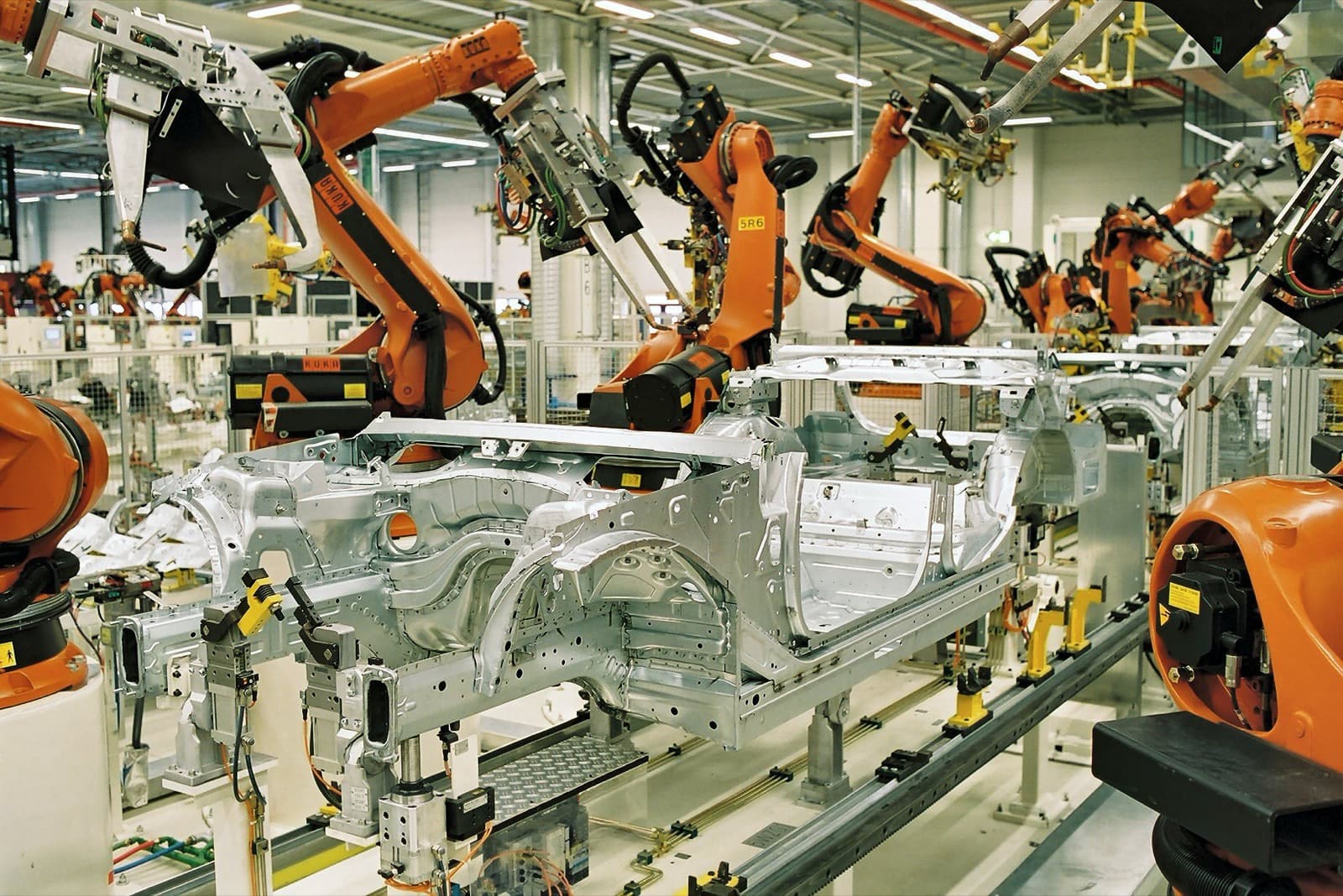
Strip the jargon and automation is three nested layers. The oldest is the industrial robot: a bolted-down arm doing one task with superhuman precision, welding the same seam a thousand times a day. This layer is mature and enormous — factories installed roughly 542,000 industrial robots worldwide in 2024, bringing the global operating stock to about 4.7 million.
The second layer is mobile: robots that navigate rather than sit. This is the warehouse revolution. Amazon alone passed one million robots deployed, and machines now shuttle shelves, sort packages, and unload trailers in ordinary warehouses. What changed wasn't the hardware so much as the software: cheap sensors and better perception let machines share space safely with people.
The third layer is the famous one: humanoids. The honest assessment: real, but early. BMW, Mercedes, and Amazon have run genuine factory and warehouse pilots, and the logic is legitimate, since the world is built for human bodies and a human-shaped machine slots into existing spaces without redesign. But pilots are not production, and the useful test is brutally simple: ignore the demo videos, count the paid deployments. By that count, humanoids remain a rounding error next to the four-and-a-half million bolted-down arms doing the actual work. The boring layers pay for the buildout; the humanoid layer is an option on the future, priced like a certainty.
Now trace the chain, because automation is where several of our systems visibly connect: geopolitics drives reshoring → reshoring demands labor that demographics can't supply → the gap pulls in automation → automation pulls on chips, machine vision, motion control, and electricity → and the same shortage logic runs straight into defense, where munitions plants compete for the same scarce machinists, a problem we traced in The Arsenal Gap. One shortage, many symptoms.
A cardinal that loses a food source doesn't petition the forest to restore it. It switches seeds, shifts territory, adapts to the winter it actually got. Economies under labor scarcity behave the same way — Japan and South Korea, the world's oldest big economies, quietly became the world's densest robot adopters. Scarcity didn't cause their unemployment. It caused their adaptation. America's turn is starting.
Key Judgments
- Labor scarcity, not labor replacement, will be the dominant driver of U.S. automation adoption through 2030. If manufacturing wages stagnate and vacancies vanish, this thesis is wrong.
- Warehouse and logistics automation is the fastest-compounding segment, because the return on investment is measured in months and the environments are controlled.
- Reshoring at announced scale is almost certainly impossible without automation; the factories that succeed will be the most automated ones, which caps how many jobs reshoring "brings back" per press release.
- Humanoid robots will find real niches this decade but likely stay under a few percent of robot deployments through 2030; general-purpose usefulness remains unproven.
- The reliable economics sit with component and integration suppliers — the sellers of arms, sensors, and software — rather than with any single platform bet.
Risks & Counterarguments
The counter-case has teeth. Automation projects fail constantly and quietly; the graveyard of over-promised robotics is large, and integration costs routinely double the sticker price. A recession would freeze capital budgets and make labor abundant again for a while, gutting the near-term urgency. AI-driven white-collar productivity could also steal the investment dollars — if software automates the office more cheaply than machines automate the plant, capital will follow the easier return. And the humanoid segment in particular carries bubble dynamics: venture valuations assume deployment curves no industrial technology has ever achieved. And if automation succeeds too visibly while displacing specific workers, political backlash could outrun the demographics that justify it.
Why It Matters
This is the decade's quietest big collision: the country is simultaneously running out of industrial workers and trying to re-industrialize. Whether the automation economy closes that gap determines whether reshoring is a real economic era or an expensive press-release cycle — and it will decide which regions, companies, and skills the next decade rewards. Understanding it now means recognizing the difference between automation stories priced on demographics and those priced on demos.
What We're Watching
- BLS manufacturing job openings and quit rates. Persistent vacancies validate the thesis; a collapse in openings undermines it.
- Annual robot installation data from the International Federation of Robotics, especially North American growth versus Asia.
- Humanoid pilots converting to paid, multi-hundred-unit production deployments — the single clearest signal separating substance from spectacle.
- Automation content in reshored factories: robots per thousand workers in new U.S. plants versus legacy ones.
- Community college and apprenticeship enrollment in robotics maintenance — the humans the automation economy actually needs more of.
Sources: Bureau of Labor Statistics JOLTS and employment projections; Deloitte and The Manufacturing Institute workforce studies; International Federation of Robotics World Robotics reports; company disclosures. This is analysis, not investment advice.