
The Housing Supply Problem
Rates froze the market, but the shortage predates them by a generation. Zoning, permitting, labor, and the vanished starter home — and the state-level reform wave finally attacking them.
Bottom Line Up Front
Mortgage rates explain why the housing market froze. They don't explain why it was so fragile in the first place. That's a supply story, and it's decades old.
America hasn't built enough homes since the 2008 bust gutted the construction industry. Shortfall estimates run from the National Association of Home Builders' roughly 1.2 million units to several million elsewhere — arguments about size, never direction.
The shortage isn't evenly spread. It's concentrated in one product — the modest starter home, which has nearly vanished from new construction. Regulated out, not out-competed.
The encouraging news: the politics finally moved — states from Montana to Texas to California have passed the most significant pro-housing reforms in generations. The discouraging news: reforms passed this year become houses years from now.
The $7,990 house
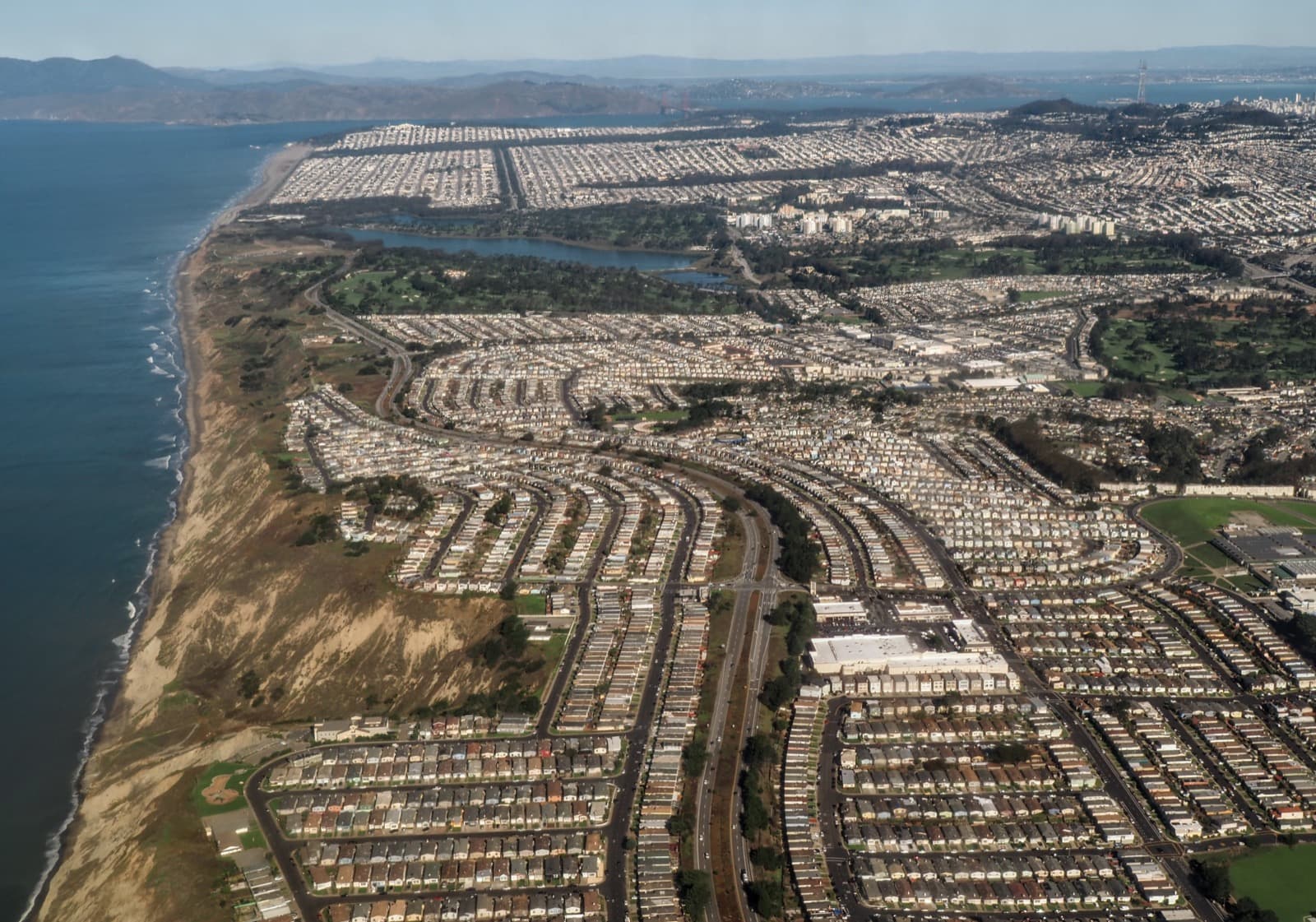
In 1950, a returning veteran could walk into a Levittown, New York sales office and buy a brand-new house for $7,990 — roughly $100,000 today. Small, identical to its neighbors, 750-odd square feet — it turned renters into owners by the tens of thousands. The famous aerials of Daly City's little boxes show what building your way out of a housing crisis looks like.
Try to build that house today. In most American suburbs you literally can't. The lot is illegal: minimum lot sizes demand more land than the design uses. The house is illegal: minimum square footage, parking mandates, setback rules. And even where it's technically legal, months of permitting, hearings, and impact fees add costs only a larger, pricier house can absorb.
That's the plain-English core of the supply problem: it's not that America can't build starter homes — it made them against the rules, then spent thirty years wondering where they went. We're short one specific thing: the cheap first home, in the metros where the jobs are.
How the pipeline actually clogged
Think of a metro's housing market as an old-growth forest. The canopy — existing homeowners, whose equity is their net worth — closes over time, and the rules they write at zoning meetings act like shade: nothing new grows underneath. A cardinal could tell you how that ends: birds don't nest where the understory is bare; they go where young growth is coming in. So does population.
The clog has three layers.
Land and rules. Zoning decides what may exist on each parcel; in most high-demand metros the answer is "one large house." When only big homes are legal, land prices rise to match, making small homes even less economic — a ratchet. Permitting adds time, and time in construction is money borrowed at interest.
Labor. The 2008 bust didn't just bankrupt builders; it dissolved the workforce. A generation of framers and electricians left and wasn't replaced — job openings in construction have run near 300,000. The cross-system twist: housing now competes for the same crews with the factory-and-data-center construction boom. The semiconductor fab outside Phoenix pays framers with federally subsidized money; the starter home can't match that bid. Industrial policy → construction wages → housing costs: a chain nobody designed.
The math of the small house. Land, permits, hookups, and impact fees cost roughly the same at 1,200 square feet or 3,200. Builders aren't villains for building big; big is where the fixed costs pencil. Hence thin output: single-family starts ran at an 895,000 annual pace in June 2026, down from a year earlier, with permits pointing lower.
What's new is the political response. Montana's 2023 "Montana Miracle" legalized ADUs and duplexes on single-family lots statewide, then added parking and height reforms in 2025. Texas passed 2025 laws forcing its big cities to allow starter-home-sized lots and apartments in commercial zones. California made backyard ADUs a durable statewide right, removing owner-occupancy requirements as of January 2026. Pew counts 2025 as a record, notably bipartisan, year for state housing reform — red and blue states converging on the same diagnosis.
Key Judgments
- The supply shortage remains the binding constraint of the decade; even a full mortgage-rate normalization would restore transactions, not abundance.
- State preemption of local zoning is now a durable, bipartisan trend — the era of purely local control over housing supply is ending.
- Measurable results arrive late: 2023–2026 reforms won't visibly move starts before the late 2020s, and the gap between passage and production will be misread as failure.
- Construction labor is the sleeper constraint — without workforce growth (including immigration), zoning reform legalizes homes no one is available to build.
Risks & Counterarguments
The strongest counterargument is Texas and Florida in 2026: record builder inventories, price cuts, homes sitting unsold. If there's a shortage, why the glut? The honest answer: a shortage of affordable homes in high-opportunity places coexists easily with a local surplus of $450,000 homes priced against 6.6% mortgages. But the optics will fund "the shortage is a myth" takes for years, and weaker national demand could stall reform momentum just as it works.
Reform itself can disappoint. Legalizing ADUs statewide produces thousands of units, not millions; early results are directionally right and numerically small. Local governments are also inventive — impact fees, design review, and utility-hookup queues can quietly rebuild the walls that zoning reform tore down.
Why It Matters
Every other housing story we publish — the freeze, the builders' dominance, the institutional bid, the Sun Belt's rise — happens inside this container. Scarcity is why small institutional purchases move prices, why builders hold pricing power, why a generation's household formation slipped. It's also an inflation story: shelter is the largest line in the CPI, which means zoning boards influence interest rates. Fix supply and every downstream problem shrinks. Don't, and no rate cut will save affordability.
What We're Watching
- Single-family permits in reform states — Montana, Texas — versus non-reform neighbors: the cleanest natural experiment in housing policy.
- The under-$300,000 share of new-home sales — a sustained climb would mark the starter home's actual return.
- Construction job openings and trades wages — relief is a precondition for everything else.
- ADU and small-lot permit counts in California and Texas.
- Whether the 2027 state legislative sessions extend the reform wave or mark its high-water line.
Sources: U.S. Census Bureau/HUD New Residential Construction; National Association of Home Builders shortage and labor estimates; Pew Charitable Trusts state-policy tracking; Montana, Texas, and California legislative records; Bureau of Labor Statistics JOLTS. This is analysis, not investment advice.